The Role of Technology in Modern Delivery Operations
Modern pizza delivery operations rely on sophisticated technology systems that enable efficient coordination between kitchen operations, dispatch functions, and delivery personnel. These technological systems have transformed delivery from simple point-to-point transportation into complex logistical operations that optimize multiple variables simultaneously. Understanding these technological foundations helps consumers appreciate the sophistication behind contemporary delivery services.
Technology integration occurs at every stage of the delivery process, from initial order receipt through final delivery confirmation. These systems handle data processing, communication, routing optimization, and real-time coordination, creating an integrated operational environment that maximizes efficiency while maintaining service quality. The most successful delivery operations leverage technology to address the inherent complexity of managing multiple simultaneous deliveries across varied geographic areas.
Geographic Information Systems and Mapping
Geographic Information Systems (GIS) form the technological foundation for modern delivery operations. These systems provide detailed mapping capabilities that enable precise location identification, route calculation, and geographic analysis. GIS technology allows delivery operations to understand the spatial relationships between restaurants, customers, and delivery routes, facilitating efficient planning and coordination.
Advanced mapping systems incorporate multiple layers of geographic data, including road networks, traffic patterns, speed limits, and geographic barriers. This comprehensive geographic understanding enables more accurate delivery time estimates and more efficient route planning. Rather than relying on simple distance calculations, modern systems can account for the complex realities of actual travel conditions and route characteristics.
Geographic data also supports delivery zone planning and service area optimization. By analyzing customer distribution patterns and travel characteristics, operations can define optimal delivery radii and identify areas where service expansion might be feasible. This geographic analysis helps balance customer reach with operational efficiency, ensuring that delivery services remain practical and sustainable.
Real-time geographic data integration allows systems to adapt to changing conditions, such as road closures or traffic incidents. This dynamic capability enables delivery operations to respond quickly to unexpected situations, rerouting deliveries as needed to minimize delays. The combination of comprehensive geographic data and real-time updates creates a flexible system that can handle the unpredictable nature of delivery operations.
Route Optimization Algorithms
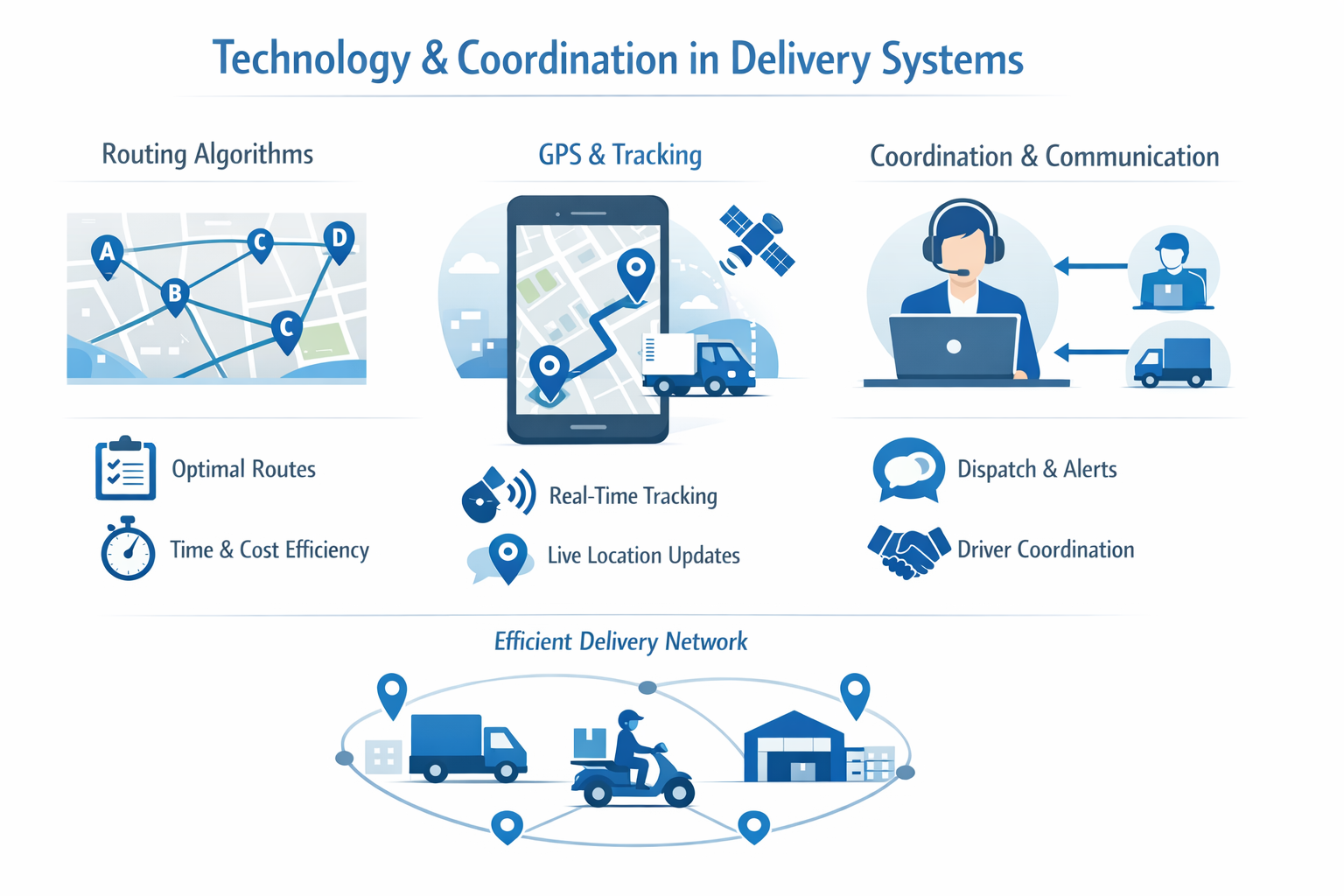
Route optimization represents one of the most sophisticated technological applications in delivery operations. These algorithms analyze multiple variables to determine the most efficient delivery sequences and paths, considering factors such as distance, traffic conditions, delivery time windows, and vehicle capacity. The goal is to minimize total travel time and distance while meeting customer service expectations.
Basic route optimization might simply arrange deliveries in geographic sequence, minimizing backtracking and unnecessary travel. More sophisticated systems incorporate traffic predictions, historical delivery time data, and real-time conditions to create truly optimized routes. These advanced algorithms can balance competing priorities, such as minimizing total travel time versus ensuring individual deliveries meet promised time windows.
Multi-stop route planning presents particular challenges, as the optimal sequence for multiple deliveries depends on complex interactions between locations. Mathematical optimization techniques, including variations of the traveling salesman problem, help determine efficient sequences that minimize total travel distance while respecting practical constraints such as delivery time requirements and driver availability.
Dynamic route optimization allows systems to adjust routes in real-time based on changing conditions. When new orders arrive, traffic patterns shift, or unexpected delays occur, optimization algorithms can recalculate optimal routes, potentially reassigning deliveries or adjusting sequences to maintain overall efficiency. This dynamic capability helps delivery operations adapt to the constantly changing conditions that characterize real-world delivery environments.
Communication and Coordination Systems
Effective communication represents a critical technological component of delivery operations. Modern systems provide real-time communication channels between kitchen staff, dispatch personnel, and delivery drivers, ensuring that all parties have access to current information and can coordinate their activities effectively. These communication systems help prevent errors, minimize delays, and enable rapid response to changing conditions.
Order information flows through multiple stages, from initial receipt through kitchen preparation, dispatch assignment, and final delivery. At each stage, relevant personnel need access to specific information about order details, timing requirements, and special instructions. Integrated communication systems ensure that this information flows smoothly between stages, preventing miscommunication and errors that could delay deliveries or compromise service quality.
Real-time status updates allow all participants to track order progress through the delivery pipeline. Kitchen staff can see when orders are approaching completion, dispatch personnel can monitor driver locations and availability, and delivery drivers receive updated information about their assigned deliveries. This shared visibility enables better coordination and more efficient resource allocation.
Communication systems also facilitate problem resolution when unexpected issues arise. Whether addressing difficult-to-find locations, customer availability questions, or order modifications, effective communication channels enable rapid response and resolution. The ability to quickly communicate and coordinate helps minimize the impact of unexpected situations on overall delivery performance.
Data Analytics and Performance Monitoring
Data analytics capabilities enable delivery operations to monitor performance, identify trends, and make informed operational decisions. By collecting and analyzing data from thousands of deliveries, operations can gain insights into patterns and factors that influence delivery performance. This analytical approach supports continuous improvement and evidence-based decision making.
Performance metrics tracked by delivery systems typically include average delivery times, on-time delivery rates, customer satisfaction scores, and operational efficiency measures. These metrics provide quantitative assessments of how well the delivery system is performing and highlight areas where improvements might be needed. Trend analysis over time can reveal seasonal patterns, the impact of operational changes, or emerging performance issues.
Predictive analytics use historical data to forecast future conditions and demand patterns. By analyzing past delivery performance under various conditions, systems can predict how factors like weather, traffic, or demand peaks might affect future delivery times. These predictions help operations prepare for challenging conditions and set realistic customer expectations.
Root cause analysis capabilities help operations understand the underlying factors behind performance variations. When delivery times increase or customer satisfaction declines, analytical tools can help identify whether the causes relate to traffic patterns, staffing levels, equipment issues, or other factors. This understanding enables targeted interventions that address specific problems rather than applying generic solutions.
Integration and System Architecture
The effectiveness of delivery technology depends on how well different systems integrate and work together. Order management systems, kitchen display systems, dispatch platforms, and communication tools must all function as an integrated whole, sharing data seamlessly and supporting coordinated operations. This system integration represents a significant technical challenge but is essential for maximizing the benefits of technological capabilities.
Modern delivery operations typically employ cloud-based architectures that provide scalability, accessibility, and reliability. Cloud systems allow multiple locations to access shared data and applications, supporting consistent operations across geographic areas. These architectures also facilitate remote access and management, enabling oversight and coordination across distributed operations.
System reliability and redundancy represent critical considerations for delivery technology. Delivery operations depend on these systems functioning reliably, and system failures can disrupt operations and impact customer service. Robust architecture includes backup systems, failover capabilities, and disaster recovery plans to ensure continuity of operations even when technical issues occur.
Security considerations also play an important role in delivery system design. Customer information, payment data, and operational details must be protected through appropriate security measures. Compliance with data protection regulations and industry standards helps ensure that delivery operations maintain customer trust while leveraging technological capabilities.
The Future of Delivery Technology
Delivery technology continues to evolve rapidly, with emerging capabilities promising further improvements in efficiency and service quality. Advances in artificial intelligence, machine learning, and automation are creating new possibilities for delivery operations. These developments suggest that delivery systems will become even more sophisticated and capable in the coming years.
Artificial intelligence applications are enhancing route optimization, demand forecasting, and operational decision making. Machine learning algorithms can identify complex patterns in delivery data that human analysts might miss, enabling more accurate predictions and more efficient operations. These AI capabilities continue to improve as systems accumulate more data and learn from experience.
Automation technologies are beginning to impact delivery operations, from automated kitchen equipment to experimental autonomous delivery vehicles. While widespread adoption of these technologies remains in early stages, they represent potential future developments that could transform delivery operations. The pace of technological advancement suggests that delivery systems will continue evolving rapidly in the coming years.
The integration of delivery technology with broader smart city initiatives and Internet of Things (IoT) systems creates additional possibilities for optimization. Connected vehicles, smart traffic management, and real-time environmental monitoring could all contribute to more efficient and responsive delivery operations. These emerging technologies suggest that the future of delivery will be increasingly interconnected and data-driven.
Understanding the technological foundations of modern delivery operations helps consumers appreciate the sophistication behind services that might appear simple on the surface. The complex interplay of geographic systems, optimization algorithms, communication platforms, and analytical tools creates delivery capabilities that would have been impossible just a few decades ago. As technology continues to advance, delivery operations will likely become even more efficient and sophisticated, continuing to improve the customer experience while maintaining operational sustainability.